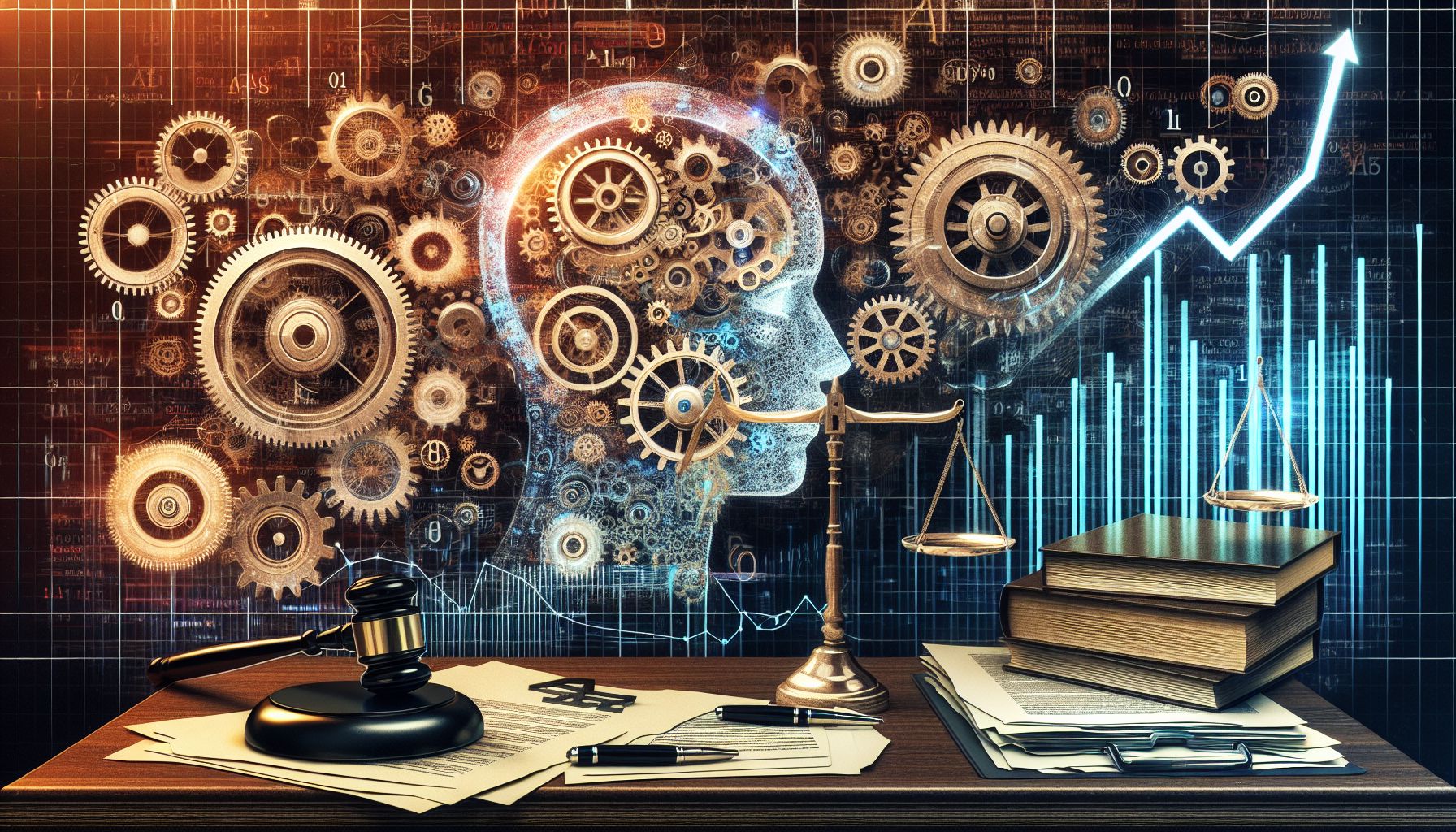

Welcome tech enthusiasts and forward-thinkers! Today, we’re diving into a topic that’s as electrifying as a bolt of lightning — how Artificial Intelligence (AI) is changing government and economic policy. And let’s not kid ourselves, the AI revolution isn’t just knocking on the door; it’s kicked the door off its hinges and is rearranging all the furniture inside!
The Dawn of the Machine Age
We’re living in an era that has historians scratching their heads and futurists rubbing their hands together in glee. Over the last decade, AI has graduated from the mystique-filled labs of computer scientists and leaped into everyday applications. Whether it’s the predictive algorithms Netflix uses to glue us to our screens or the self-driving cars that promise to redefine urban mobility, AI is rapidly turning sci-fi into just “sci.”
Yet, what’s equally fascinating are the quiet but seismic shifts AI is creating in the corridors of government and the blueprints of economic policy. If there is a ‘singularity’, where machine intelligence surpasses human capabilities in every possible sense, AI is in the pilot seat steering us towards it.
Global Competitiveness and AI Adoption
AI has rapidly become a key factor in a country’s economic future. Nations are now launching AI strategies like never before. Governments see AI as a tsunami that’s set to bulldoze traditional industries and want to be the ones either riding that wave or directing it. For instance, China and the United States are caught up in what’s been dubbed the ‘AI Arms Race’. Each is pouring billions into research with the hope of establishing dominance in this field.
The consequences are staggering. Countries that harness AI effectively could witness astronomical boosts in GDP, like catching a permanent economic tailwind. But that’s just the surface gloss. To truly get these benefits, nations need policies that make AI not just a fancy tool for innovation, but an essential part of society’s infrastructure.
How AI Reshapes Policy
Employment: The Alarm and Opportunity
There’s no escaping it — AI is the ominous specter lurking behind the future of work. The automation capabilities of AI threaten both white-collar and blue-collar jobs. So, should governments slam the brakes on automation or should they floor the accelerator pedal?
The answer is neither. The more sustainable approach is reskilling the workforce. There’s a real need for policy frameworks that enable educational ecosystems to change rapidly. Governments can no longer play catch-up; they must nurture a culture of lifelong learning, allowing citizens to transition into new roles created by AI advancements.
But it’s not all gloom and doom; AI has the potential to unlock new job sectors too. Consider the gig economy phenomenon, which AI could augment in unimaginable ways, creating jobs that align more with the digital realities of today.
Regulation: Striking the Balance
Deploying AI comes with its own Pandora’s box of ethical dilemmas. Issues surrounding privacy, accountability, and bias need policy intervention that’s as agile as it is robust. The European Union’s General Data Protection Regulation (GDPR) is a clear example of how broad efforts are needed to effectively manage AI’s societal impacts.
Governments must try to strike the balance between regulation and innovation. Too tight a leash could stifle creativity, while too much freedom could result in unintended consequences. Policies designed to encourage ethical AI development can convince companies to operate within mature frameworks — think transparency in how AI-driven decisions are made, or how data is collected and used.
Economic Shift: From Ownership to Access
AI could flip economic structures on their head by bolstering the ‘as-a-service’ model. As AI improves, everything from transportation to healthcare could increasingly move into subscription-based models, providing affordable access rather than costly ownership. Cloud-based AI solutions could allow small businesses to tap into technologies that once required vast upfront investments.
However, the question lingers: How will equality be maintained in such an economy? It will require careful governmental maneuvering regarding taxation policy and subsidies if everyone is to benefit equitably.
Security, Surveillance, and Policy Implications
Security is another hefty area where AI’s entry is rewriting the rulebook. Governments are keen to use AI for nation-state protection, which spans everything from sophisticated cyber defenses to AI-enhanced drone warfare. The ethical consequences here are massive; they demand a fresh perspective on public policy.
Furthermore, AI has the potential to enhance surveillance capabilities to Orwellian heights. Democratic governments need to uphold human rights by creating policies that protect the populace from both state and non-state actors. Balancing public safety with individual privacy will be one of the defining ethical quandaries of our age.
AI in Public Services: An Optimization Catalyst
Public sectors around the world are groaning under the weight of legacy systems and bureaucratic inefficiencies. Enter AI: a fitting antidote. Early adopters like Estonia have introduced AI to handle everything from tax filing to healthcare management, drastically reducing administrative burden and improving efficiency. Policies encouraging such AI-driven improvements can make public services not just operational, but excellent.
Conclusion: Charting the AI-Powered Horizon
As we sit perched on the cusp of this unprecedented change, it’s evident that the AI revolution is deeply connected to how governments and economies respond. Whether it is unleashing new dynamic job markets, bringing new forms of service delivery, or constructing ethical frameworks, AI’s influence will be widespread.
Let’s be real, our societies can benefit enormously from this upcoming reality, but only if we get the policies right. The bridges governments and economies build now will determine not just the winners and losers in geopolitical arenas, but the quality and inclusivity of life for us all.
We’re at an inflection point, folks. How governments and economic policies change to accommodate AI’s rocket-fueled ascent will not just redefine technology’s impact on society but will ultimately shape the human condition itself.
That’s all for today, but stay curious and stay informed, because the future is happening faster than you’d think. Did you enjoy the read? Have nuggets of wisdom to share or spirited rebuttals? Engage with the comments — the dialogue is what keeps our tech community thriving. Until next time, iterate, innovate, and inspire!