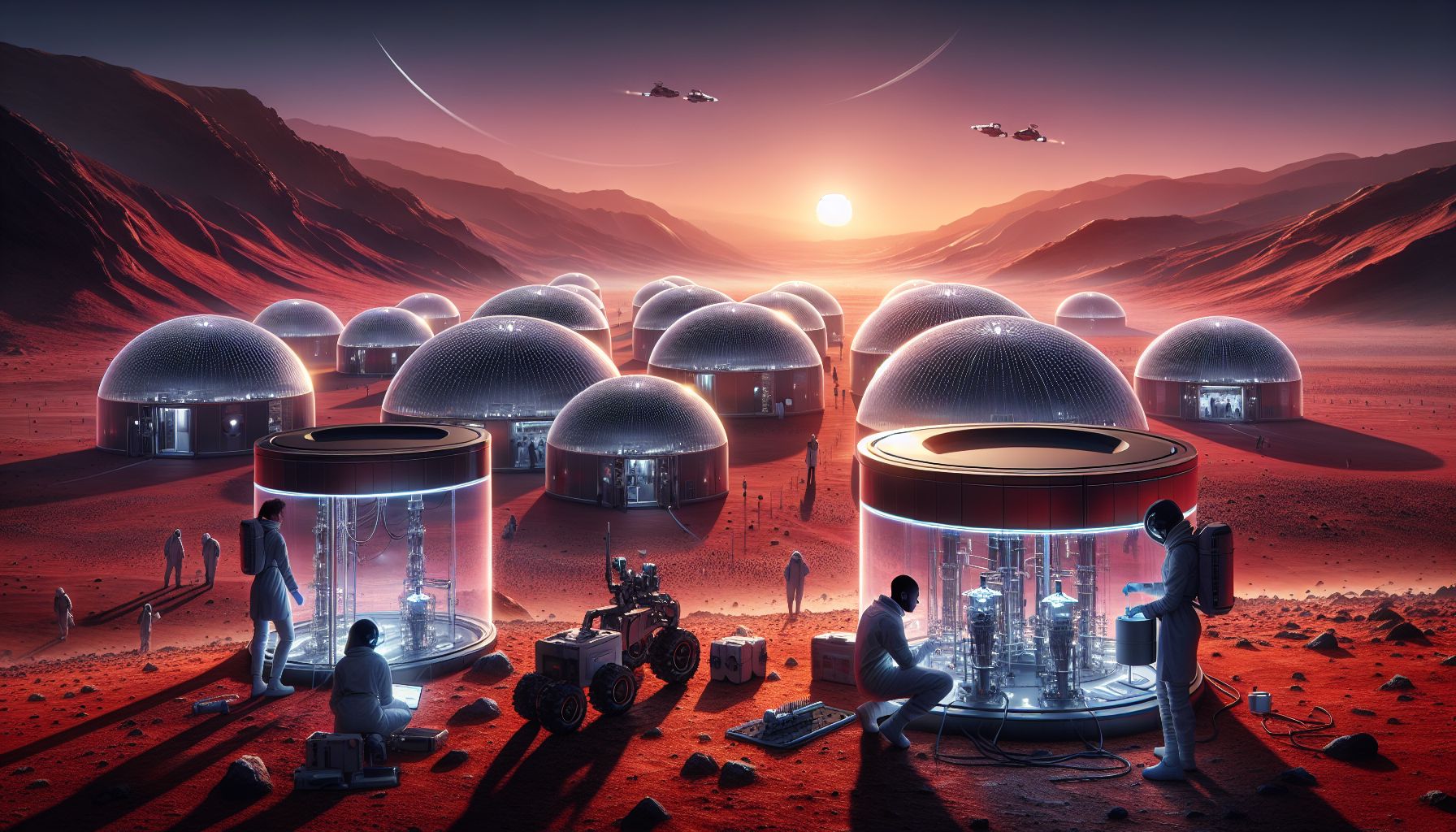

Hey tech enthusiasts and future-minded thinkers! Grab your favorite space-themed mug of coffee because today, we’re journeying to the stars. Specifically, I want to talk about the exciting breakthroughs happening around Mars colonization. This isn’t just rocket science, it’s a multi-disciplinary effort involving AI, robotics, and even blockchain. To ground it a bit, we’ll talk about how governments and economic policies worldwide are responding (or should be) to this incredible frontier.
The Mars Manifesto: Why Colonize the Red Planet?
The longing to explore Mars isn’t just about the romantic allure of venturing into the unknown. It’s about survival, innovation, and yes, perhaps even democracy among the stars. Elon Musk famously said, “I want to die on Mars, just not on impact.” That kind of drive captures why Mars is often considered the next logical step for humanity’s celestial ambition.
Economic Growth Beyond Earth
Picture a thriving colony on Mars where industries don’t just replicate Earth’s economy, they redefine it. Resources like rare metals, pristine solar energy, and even Martian agriculture could fuel unprecedented economic growth. Blockchain could be the backbone of Martian financial transactions. After all, Earth-based banks might struggle with interplanetary transactions.
The International Mars Society recently published a white paper plotting a $100 billion path toward establishing a colony in the next few decades. Industry experts are already debating the economic models. Imagine working as a miner on Mars, paid in crypto that’s backed by actual interstellar assets. We’re on the brink of redefining “day jobs.”
Mars and Earth Parity: Bridging Governance
The establishment of a Mars colony raises fundamental questions about governance that could mirror today’s debates on autonomy and statehood. Would Martians pay Earth taxes, or should a self-sustaining Martian government arise? The scope for innovation here is tremendous, challenging Earth’s oldest governing norms with new, experimental policies designed to support rapid technological development.
Countries like the UAE and private organizations like SpaceX are already laying down guidelines for legal and economic structures. As we make advances in AI and blockchain, the potential to create a self-governing, autonomous colony becomes more realistic.
The Technological Framework: Innovating for Mars
Let’s take a tech-savvy look at how AI, robotics, and other cutting-edge technologies are powering this new frontier.
AI and Robotics: The Unsung Heroes
AI and robotics aren’t only accelerating our terrestrial goals but are literally building our future on Mars. Picture swarms of self-replicating robots, a concept key to Elon Musk’s Mars plan. These robots could mine resources, construct habitats, or even “grow” the next iteration of AI-based support systems.
AI algorithms could tackle everything from climate modeling to predictive algorithms for resource allocation. And when the inevitable happens (something breaks), autonomous, machine-learning-driven systems can self-diagnose and solve challenges without human intervention. This is more than just smart tech. It’s autonomy and resilience on a planetary scale.
Blockchain: The Ledger of the Red Planet
The role of blockchain is becoming important not just for its transparency or decentralized nature but as an immutable ledger for property rights and resource allocation on Mars. Given the inert nature of currencies as we know them on Earth, could a new, Martian tokenized system flourish?
Hyperledger, Ethereum, and others are eyeing Martian applications. Think smart contracts, not just for property exchanges but also for governance, effectively eliminating bureaucratic red tape and enabling direct, efficient decision-making.
Government Policy: The Final Frontier?
As exciting as Mars colonization is, it operates in the gray area of space law and policy. The Outer Space Treaty of 1967 is outdated concerning today’s aspirations. There’s a need for collaboration, perhaps on a multinational level, like a “United Nations for Outer Space.”
The Global Space Race: More Than Just Nationalism
Countries are investing billions into their space programs, albeit mostly for prestige. The next logical frontier isn’t just a new moon race. It requires a coalition-of-the-willing approach. Wouldn’t it be interesting to see what happens when political boundaries blur for the sake of humankind’s next leap?
One model to consider is the International Space Station’s (ISS) cooperation framework. While it’s not perfect, it demonstrates that international partnerships can work, even among countries that don’t always see eye to eye geopolitically.
Challenges Ahead: A Popup of Reality
Ethical Dilemmas and Human Rights
Before we cozy up in a Martian habitat, let’s pause. Ethical concerns abound. Will the first Martians be geniuses, leaving behind the majority of Earth’s humanity? Such a thought brings us into murky ethical waters where both tech and policy will play important roles.
The Gravity of the Situation (Literally)
Gravity on Mars is only 38% of Earth’s, posing challenges not just for human health but for everything from structural engineering to agricultural viability. These real-world challenges require our best minds in tech and policy working together, perhaps laying the ground for multidisciplinary “Martian think tanks.”
Conclusion: The Promise and Peril of the Red Planet
The quest to colonize Mars is a complex web woven not just with the bright threads of scientific curiosity but with policies, economics, and a new social contract. With technologies like AI, robotics, and blockchain speeding along our path to the stars, it feels like our SciFi dreams are on the horizon.
Governments must update their space policies, tech companies must push the bounds of what’s possible, and societies must ask what life should look like on another world. That’s where we, the tech-savvy adventurers, come in. We don’t just sit back and watch. We contribute to the narrative, ensuring that this giant leap for mankind benefits everyone.
Stay starry-eyed, folks. Our journey is just beginning, and Mars is just the first stop. Let’s keep looking up.
Would love to hear your thoughts: Do you think we over-romanticize Mars colonization? Or is it the single next step humanity must take? Drop your musings in the comments!
Until we meet in the matrix,
[Your Name]