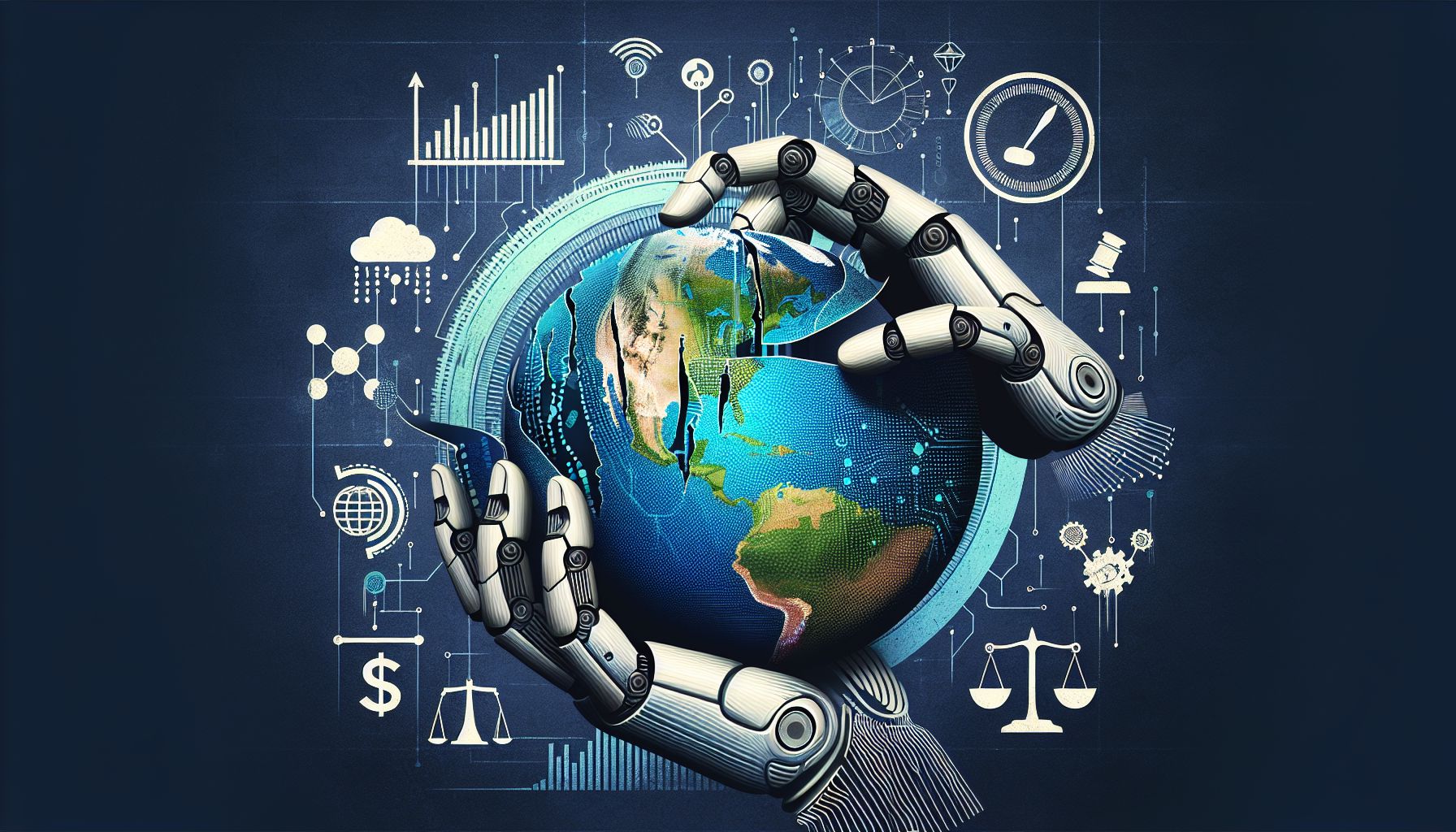

Hello, fellow tech aficionados! Today, we’re diving deep into the bubbling frontier of artificial intelligence (AI) and its exciting, tumultuous dance with government and economic policy. It’s rapidly becoming not just a buzzword, but a cornerstone of modern technological development. AI’s impact on society is undisputed, but its interaction with governmental structures—a topic of hot debate—plunges us into the corridors of power where technology and policy collide and coalesce.
The Relentless Rise of AI
Let’s face it, AI isn’t a fledgling technology anymore. It’s maturing rapidly, and it’s impressively ambidextrous, flexing its digital muscles in every conceivable domain. From healthcare to finance, education to entertainment, AI is weaving itself into the fabric of our daily lives. What excites me the most is the potential for AI to address some of our most persistent global challenges, from climate change to educational disparity.
But as this digital prodigy continues to mature, it’s also drawing the watchful eyes of state powers across the globe. Many of us have noticed that AI’s ascent is forcing governments to rethink their roles, transforming from traditional regulatory bodies into agile entities that must collaborate, innovate, and sometimes concede authority to machine capabilities. This radical shift is as thrilling as it is daunting. Are our policymakers ready?
Unpacking AI’s Influence on Government Policy
While politicians once debated over tangible assets like oil reserves or trade tariffs, we’re now seeing algorithms and data sets become focal points of contention. This isn’t just a futuristic fantasy speculated by techno-utopians. It’s happening right now, folks, and the implications are huge.
1. Regulatory Challenges: The Data Dilemma
AI’s lifeblood is data. This isn’t a revelation to any of us, but its implications for governmental policy are profound. Comprehensive datasets can refine AI models, improving everything from predictive healthcare models to autonomous vehicle navigation systems. However, the snag in this digital utopia is how governments will grapple with privacy issues, data sovereignty, and intellectual property rights. A policy misstep could stifle innovation or, conversely, leave citizens vulnerable to exploitation.
Let me paint a picture. Imagine a future where every country mandates their data must reside within their borders. Innovation would stutter to a halt, restrained by ironclad national walls. Conversely, open data policies, if poorly managed, might jeopardize citizen privacy.
2. AI in Governance: Bureaucratic Automation
The specter of widespread unemployment looms large over the AI dialogue. As automation seeps into bureaucratic structures, optimizing processes at unprecedented scales, one can’t help but wonder: what’s left for the humans? While fears of rampant job losses aren’t entirely unfounded, I envision a more nuanced transition period rather than an abrupt displacement.
Governments are on the brink of using AI to enhance public service delivery, from instantly processing tax filings to managing welfare benefits efficiently. It’s like having a team of super bureaucrats zipping through paperwork night and day. The upside? Greater efficiency and reduced corruption. The downside? The resilience of glue-like government processes to tech adoption might slow down the wheels of AI-driven transformation.
Economic Dynamics: Riding the AI Wave
Let’s switch gears and look at how AI is recalibrating economic structures. It’s clear that AI will be, or rather already is, a major driver of the Fourth Industrial Revolution.
3. AI-Powered Economies and Job Realignment
AI’s transformative potential can either be a golden egg or a time bomb for economies worldwide. Picture this: economies as vast organisms, each sector a vital organ, linked by networks of trade, resources, and labor. Now, inject AI into this ecosystem. It’s like administering a potent catalyst, accelerating some industries into a gold rush era while rendering others obsolete overnight.
Governments need to take the reins and encourage re-skilling initiatives rather than merely pontificating from the sidelines. As certain professions diminish, others blossom. The challenge lies in facilitating a smooth transition, equipping the workforce with the necessary skills for tomorrow’s jobs before blows to the current employment landscape become severe.
4. Trade and Competition: The AI Arms Race
With great power comes great competition. Countries aren’t just vying for gold or territory anymore; they’re racing for AI supremacy. This has triggered an AI arms race, a scenario both exhilarating and unnerving. Powerhouses like the US, China, and the European Union are orchestrating grand strategies to secure technological dominance.
National AI strategies are being unveiled like blockbuster superhero movies. Each prescribes a panacea of research funding, talent development, and global competitiveness enhancements. The result? An unprecedented surge of resources directed towards AI research and deployment.
Navigating the AI Age: A Balancing Act for Policymakers
Governments find themselves in uncharted waters, tasked with creating an environment ripe for innovation while safeguarding against potential abuses of AI. It’s a high-wire act, and only the most agile of political entities will thrive.
5. Bridging the Technological Divide
The biggest fear associated with accelerated AI adoption is exacerbating existing inequities. The possibility of a world divided into AI haves and have-nots could entrench international stratifications. Governments face the formidable challenge of ensuring that AI’s benefits aren’t sequestered within boutique tech sectors or a handful of geographic locales. Programs that democratize AI research access and encourage a cross-pollination of ideas could stave off this digital divide.
6. Ethics and Accountability: AI’s Moral Compass
Regulators and policymakers must strap on their ethical thinking caps. As AI models become more complex, creating biases and making life-impacting decisions, the onus may fall on governments to construct robust frameworks that audit AI’s ‘thought processes.’ Who’s accountable when an autonomous vehicle errs? How can we create transparency within complex neural networks? These puzzles present opportunities for government to meld law with tech, crafting policies not just for penalty, but for preemption.
The Road Ahead: Collaborative Chronicles
As we edge closer to an AI-empowered world, collaboration becomes our compass. Dialogues between technologists, policy experts, ethicists, and citizens might be the crucibles from which new policies emerge. Our shared challenge is to create environments where innovation can flourish responsibly.
Policymakers, brace yourselves to adapt, reconsider, and sometimes rewrite the rulebook. As the delineations between our digital selves and our human identities continue to blur, you, dear readers, curious daydreamers, and hesitant skeptics alike, are all stakeholders in the relationship between technology and governance.
In closing, remember that while AI may be the virtuoso of digital dexterity, it’s we—humans with our infinite imagination and empathy—who must compose the symphonies of tomorrow’s societal rhythms. Let’s make it harmonious.
And, hey, keep those comments flowing. Let’s steer this revolution together.