
When the Largest Party Becomes Only the Start of the Problem
Friedrich Merz’s CDU/CSU secured roughly 28.5 percent of the vote in Germany’s February 23 snap election, making it the strongest single force in the new Bundestag. On its surface, this looks straightforward: the center-right won, the largest party leads coalition negotiations, governance resumes. But that framing misses almost everything that actually matters about what happened that day. The real story begins where the headline ends.
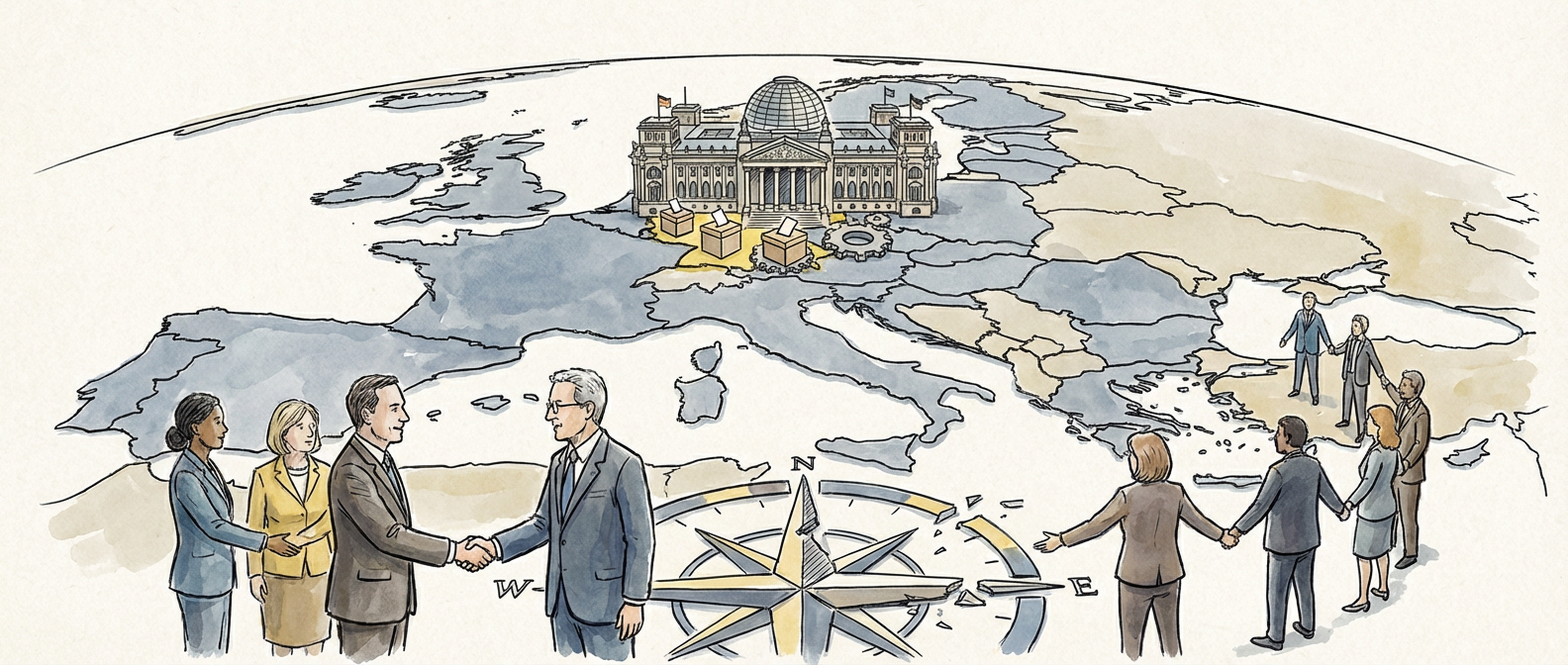
To understand why a 28.5 percent result for Germany’s traditional governing party looks more like a crisis than a mandate, you need to hold several contradictory facts in your mind at once. The CDU/CSU’s vote share, while the highest single result, still means nearly 71.5 percent of German voters chose other parties. More pressingly, how those votes spread across the fragmented landscape left Merz facing a mathematical puzzle with no clean solution. This wasn’t a dominant party picking its preferred coalition partner. This was a party winning a plurality in a political system that had undergone seismic restructuring, then discovering that first place in a fragmented race means something quite different than it did twenty years ago.
The Collapse, the Surge, and What They Reveal About Center-Right Europe
The SPD’s collapse to approximately 16.4 percent represents its worst federal result in over a century. Olaf Scholz’s government stumbled from one self-inflicted crisis to another through 2024 and finally exhausted even core Social Democratic voters. But the real story isn’t about Scholz’s personal unpopularity, though that certainly played a role. It’s about what happens to center-left parties across Europe when they can’t articulate a coherent vision for managing simultaneous economic anxiety, immigration pressures, and geopolitical uncertainty. Germany’s SPD didn’t lose voters to a resurgent Greens or a reinvigorated Left Party. They hemorrhaged support to the right and far-right, which means they lost the argument about whose diagnosis of Germany’s problems voters found more credible.
The Alternative for Germany placed second with approximately 20.8 percent, the strongest far-right federal result in post-war German history. This isn’t a footnote. This is the story. A party that mainstream German institutions spent years trying to isolate through a formal firewall policy still finished within eight percentage points of the governing coalition’s largest party. The AfD didn’t win despite the firewall; it won partly because the firewall exists. That firewall signals to AfD voters that their preferred party has moved beyond respectability-seeking, and those voters have become genuinely invested in its transgression. For Germany’s traditional custodians of liberal democracy, this creates a fundamental challenge: how do you govern while a significant chunk of your electorate has essentially seceded from the post-1945 consensus that built the very institutional framework they’re using to vote?
Coalition Negotiations as a Window Into European Fragmentation
The weeks of coalition negotiations after February revealed the mathematical constraints that would define Merz’s government. The CDU/CSU, SPD, Greens, and Free Democrats all maintained the traditional firewall against the AfD. That commitment matters as a democratic statement, but it left mathematically awkward options. The most viable path forward involved some combination of center-right, center-left, and centrist parties, which meant Merz’s government would be a coalition rather than a dominant-party government. This matters more than it initially appears.
Coalition governments aren’t inherently weak, but they require constant negotiation over fundamentals. When your coalition partners include both the SPD and the Greens alongside the CDU/CSU, environmental policy, fiscal priorities, labor regulation, and foreign policy all become subjects for explicit negotiation rather than straightforward implementation. This gets particularly messy when you’re trying to negotiate complex EU-level agreements, because your team at the European table is constrained by domestic coalition deals made with parties that often have competing visions for Europe’s future.
What German Fragmentation Means for Brussels
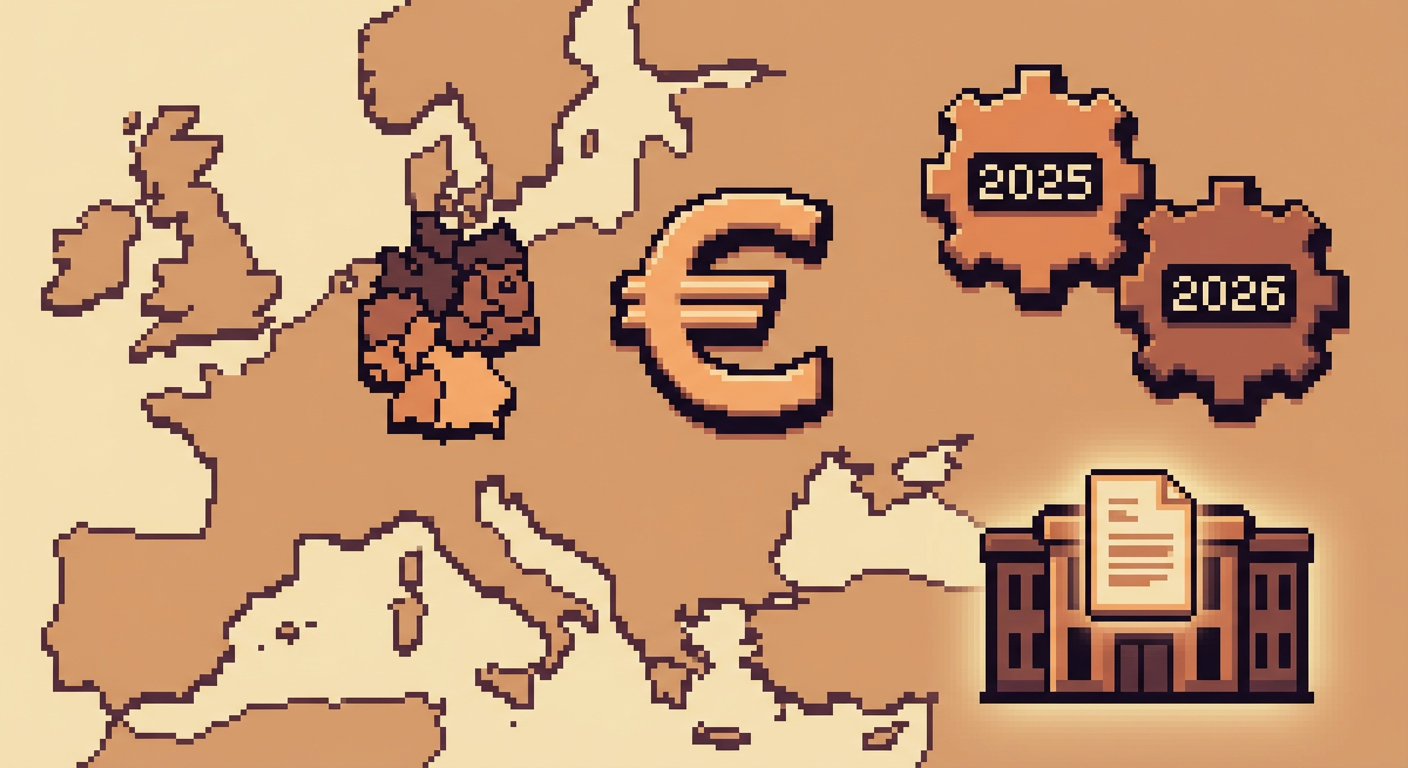
The Bertelsmann Stiftung published analysis in early 2025 that confronted this challenge directly, warning that German political fragmentation would complicate EU budget negotiations scheduled for 2025 through 2026. The foundation’s research pointed to a specific problem: Germany has historically been the strong institutional anchor in European decision-making, the country whose domestic consensus created room for ambitious EU initiatives. When German domestic politics fragments, that anchor function deteriorates. Merz would arrive at European negotiations not as a leader with undisputed domestic backing, but as a coalition leader constantly managing partners who disagreed on fundamental questions about Europe’s direction.
The consequences for EU cohesion extend well beyond Germany. The EU’s structural budget negotiations require consensus or near-consensus among member states. When Germany’s negotiating position gets constrained by domestic coalition management, other member states lose flexibility too, because they know the German government can’t move as far as it might want to. Add the fact that the AfD’s relative strength means Merz has to show core CDU voters he isn’t ceding ground on immigration or fiscal conservatism, and you get stiffer German negotiating positions on exactly the issues where flexibility would most benefit European institutional functioning.
The Broader Picture for Center-Right Politics Across Europe
Germany’s results arrived at a moment when center-right parties across Europe are grappling with similar questions about their viability. The traditional center-right formula combining fiscal conservatism with commitment to liberal democracy and European integration proved unable to hold voters as their primary concerns shifted toward immigration, cultural change, and economic security. In country after country, center-right parties either moved right to compete with far-right challengers or watched their vote share erode. Merz’s CDU/CSU won a plurality in Germany, but it was a plurality in a fractured landscape, and that distinction matters enormously for what kind of power it can actually exercise.
The February election didn’t resolve Germany’s political realignment so much as ratify it. Merz has the numbers to form a government, but not the political capital or domestic consensus to act as the kind of dominant force Germany has often represented in European politics. That’s not merely a German problem. The EU’s functioning depends partly on large member states having enough domestic consensus to make binding commitments and stick to them. When those states lose that consensus, the entire architecture becomes more brittle.
You can review the detailed official election results through the Federal Returning Officer Official 2025 Election Results if you want to examine the granular data. For broader analysis of what German fragmentation means for EU-level negotiations, the Bertelsmann Stiftung EU Policy Analysis provides useful institutional perspective. The open question is whether Merz’s government will find ways to reconstruct some version of domestic consensus that lets Germany play its traditional European role, or whether we’re watching the early stages of a long institutional adjustment to a more fragmented Germany and a more fragmented continent. I’m genuinely uncertain which way this goes. What’s your read?