
The Electoral Arithmetic and What It Reveals About German Politics
Friedrich Merz’s Christian Democratic Union and its Bavarian sister party, the Christian Social Union, secured approximately 28.5 percent of the vote in Germany’s February 23, 2025 federal election. This is the CDU/CSU’s strongest national performance in over a decade, yet the figure requires careful unpacking. While 28.5 percent sounds commanding in absolute terms, it reflects a fragmented electorate that has become the defining feature of German politics since the 2017 Bundestag election. The party won decisively among its traditional constituencies—older voters, rural regions, and economically conservative demographics—but this victory came in a parliament where no single bloc commands an outright majority and where coalition mathematics have become genuinely constraining.
Second place went to the Alternative for Germany (AfD), which secured roughly 20.8 percent of the vote. This is a historic high for the far-right party, and it warrants examination beyond the headline alarm it generates. The AfD’s vote share reflects real grievances in former East German states, persistent anxieties about immigration policy, and a segment of voters who view mainstream parties as ideologically indistinguishable. Still, the institutional response mattered enormously: every major parliamentary party maintained the so-called “cordon sanitaire,” refusing to form a coalition with the AfD. This preserved democratic norms but forced complex negotiations among parties with genuine policy disagreements. The arithmetic meant that Merz could not simply govern with a comfortable conservative majority. He faced hard choices about which coalition partners could deliver both legislative votes and programmatic compatibility.
The results also reflected the continued strength of the Social Democrats and the Greens, each holding enough seats to matter in coalition mathematics. This fragmentation, visible in Germany’s 2025 election results — Federal Returning Officer, shows that even a “strong” conservative performance in contemporary Germany requires negotiation, compromise, and the surrender of unilateral control. Understanding Merz’s subsequent governance decisions requires holding this constraint in mind.
The Coalition Formation Timeline and Its Political Significance
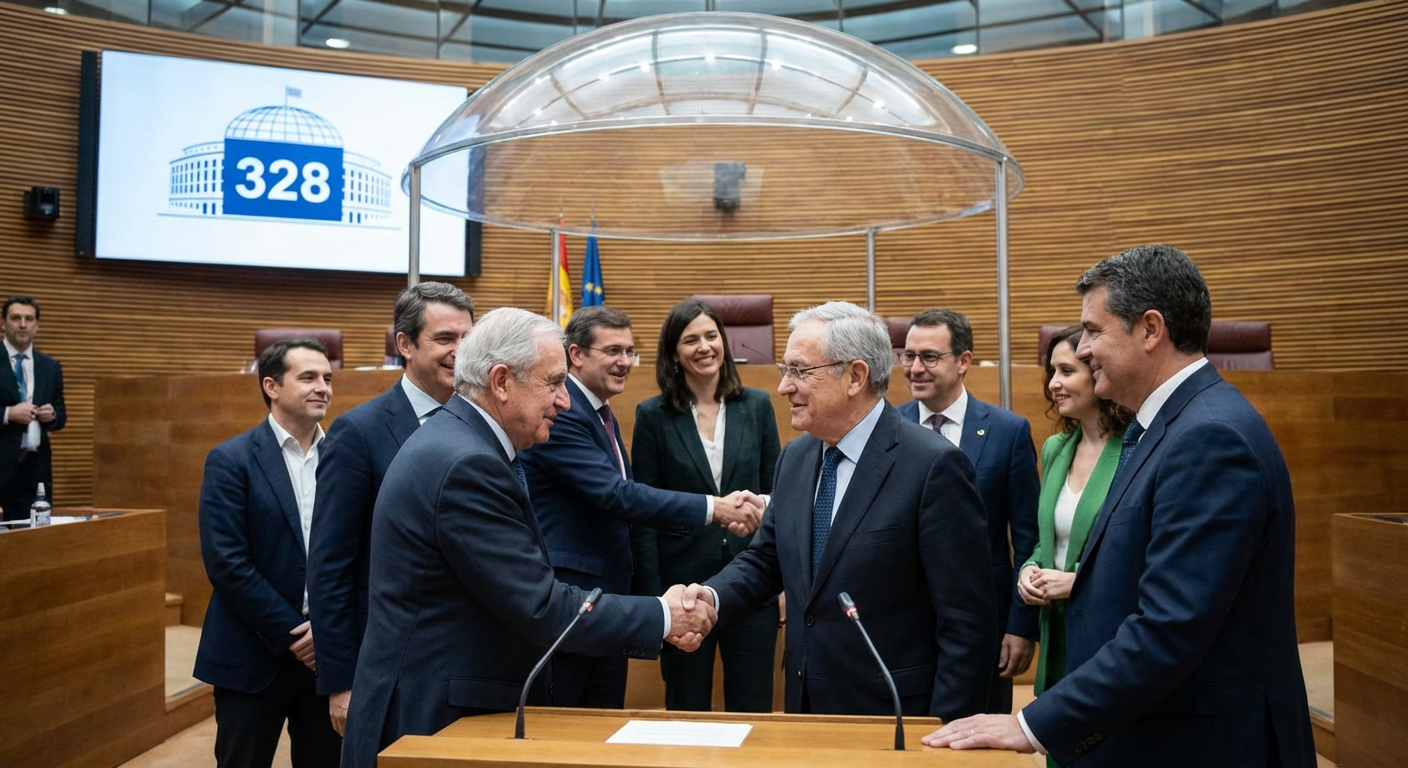
Merz’s coalition agreement with the Social Democrats, formally confirmed in April 2025, produced a governing majority of 328 seats in the 630-member Bundestag. Workable, but not overwhelming. The two-month gap between the election and formal coalition confirmation reflected genuine tensions in negotiations. The SPD, led by Olaf Scholz, held significant leverage despite finishing third. They could extract programmatic concessions because Merz’s only alternative was a three-party coalition with the Greens and the Free Democrats, an arrangement that would have been considerably more complex and ideologically disparate.
The choice of the SPD as coalition partner deserves scrutiny because it signals something about both parties’ understanding of German governance and European strategy. A CDU/CSU-Green-FDP coalition might have appeared more coherent on free-market economics, yet it would have been unstable. The SPD partnership allows for centrist consensus on labor market policies, social investment, and the welfare state while giving Merz control of the Finance Ministry and the Defense Ministry. That allocation of portfolios proved crucial to Merz’s first major policy initiative and says a lot about where his priorities actually lie.
The €500 Billion Infrastructure and Defense Package: Suspension of Constitutional Rules
In March 2025, Merz’s government passed a €500 billion infrastructure and defense package that required suspending Germany’s constitutional debt brake. This deserves detailed examination because it is a fundamental policy rupture from the CDU/CSU’s traditional fiscal conservatism. For over a decade, the party championed the debt brake, encoded in the German constitution in 2009, as essential to fiscal responsibility and intergenerational justice. Merz himself had consistently argued that structural budget discipline was non-negotiable. Yet faced with the security implications of Russia’s continued aggression in Ukraine, NATO’s 2 percent defense spending benchmark, and deteriorating infrastructure investment, he chose suspension.
The political economy here requires careful attention. Merz could argue that temporarily suspending constitutional rules during a period of acute security vulnerability differs fundamentally from abandoning fiscal discipline permanently. The SPD coalition partner provided crucial political cover because it could claim that the spending addressed both defense modernization and infrastructure renewal, priorities that appealed across the coalition. As documented in reporting on Merz government’s €500 billion spending package — Deutsche Welle, the measure passed with comfortable majorities from both parties.
This policy shift sends distinct signals about Merz’s assessment of European security realities. He has concluded that the traditional CDU emphasis on fiscal orthodoxy is incompatible with Germany’s contemporary strategic position. It means Merz believes Germany must rearm substantially, that deterrence against Russian pressure requires sustained defense investment, and that this reorientation justifies temporary departures from constitutional norms. Whether this proves defensible or precedent-setting depends on how the debt brake is eventually restored and whether future governments attempt similar suspensions for different purposes.
Bundeswehr Modernization and Germany’s NATO Role
The defense spending component of Merz’s package puts the Bundeswehr on track to reach 3 percent of GDP by 2027, according to figures from the German Federal Ministry of Finance. This exceeds NATO’s 2 percent benchmark considerably. For context: Germany spent approximately 1.6 percent of GDP on defense in 2023. Reaching 3 percent by 2027 implies sustained real increases in military expenditure, new equipment procurement, and personnel expansion. The trajectory signals that Merz intends Germany to function as NATO’s leading European military power, at least in terms of investment levels.
This carries implications well beyond German domestic politics. It suggests Merz’s government has concluded that European security, particularly in Eastern Europe, cannot depend primarily on American military guarantees. Germany must strengthen its own deterrent capacity. This is a real departure from the Scholz period, when Germany was more reluctant to lead militarily within Europe. Merz appears to be embracing a different role: Germany as Europe’s security anchor, capable of underwriting deterrence against Russian pressure without deferring automatically to American preferences.
What These Signals Portend for European Politics
The first hundred days of Merz’s government crystallize several developments that will shape European politics over the next electoral cycle. First, Germany has decisively rejected the fiscal conservatism that characterized the Merkel era. This opens possibilities for different European fiscal coordination frameworks, though it also creates tensions with states that have advocated for Eurozone fiscal integration. Merz’s precedent of constitutional debt brake suspension during security crises could eventually normalize emergency departures from fiscal orthodoxy more broadly, with unpredictable consequences.
Second, Germany’s military rearmament and NATO commitment represent a genuine geopolitical reorientation. Merz is signaling that Germany will invest in power projection and deterrence. This has implications for European defense integration, NATO burden-sharing negotiations, and the balance of power within the alliance. It suggests Germany will demand greater voice in strategic decisions, not merely because of economic size but because of military investment.
Third, the stability of the CDU/CSU-SPD coalition matters for European politics because it provides continuity and predictability at Germany’s center. Unlike a three-party coalition, this arrangement offers reasonable durability, even if programmatic tensions persist. That stability makes German leadership on European questions more credible, precisely because coalition partners have incentives to maintain governing discipline.
Finally, the cordon sanitaire around the AfD, despite its 20.8 percent vote share, shows that German democratic institutions retain resilience. Yet this resilience depends on the governing coalition actually delivering on voter concerns about migration, economic security, and international stability. If the Merz government fails to address these anxieties, future elections may see further erosion of mainstream party support. The election results and subsequent governance decisions are not a permanent resolution of German political instability. They are a critical juncture where the direction remains genuinely contested.
What aspects of Merz’s governance have surprised you most? Which European implications concern you most deeply, and why do you think European publics remain relatively disengaged from debates about Germany’s